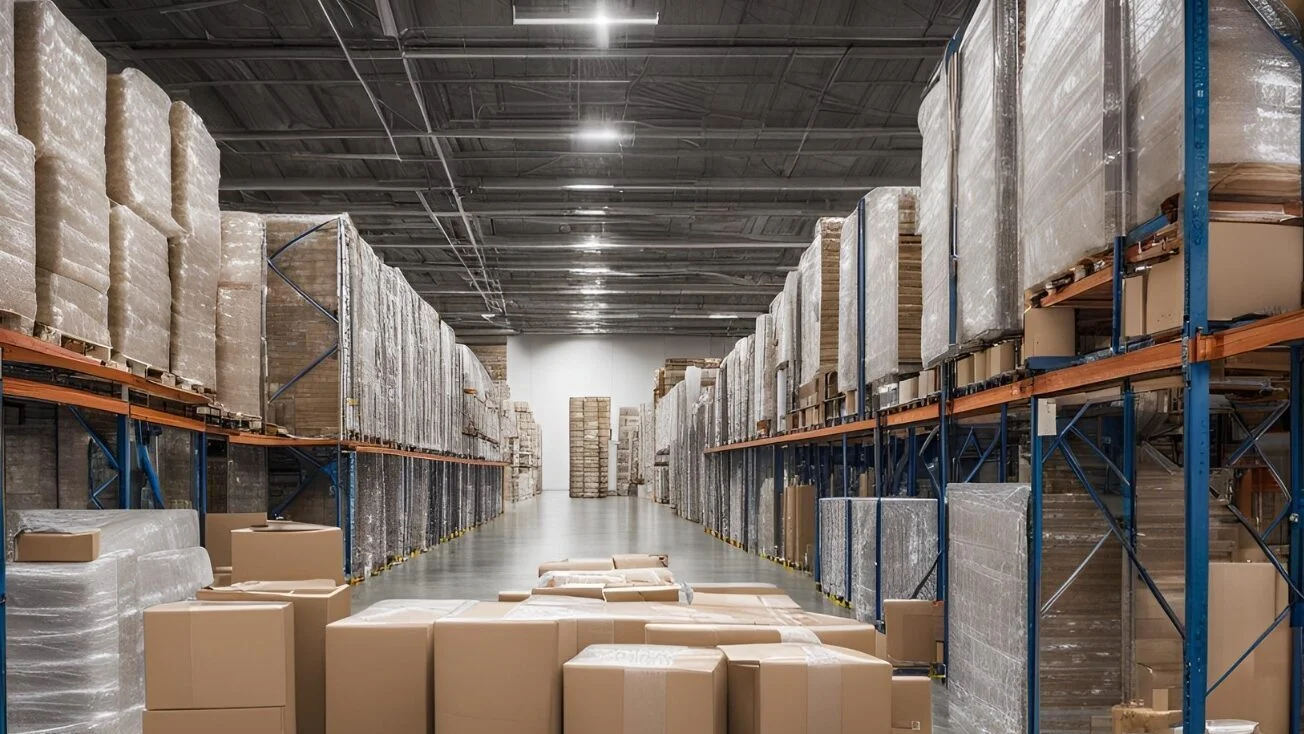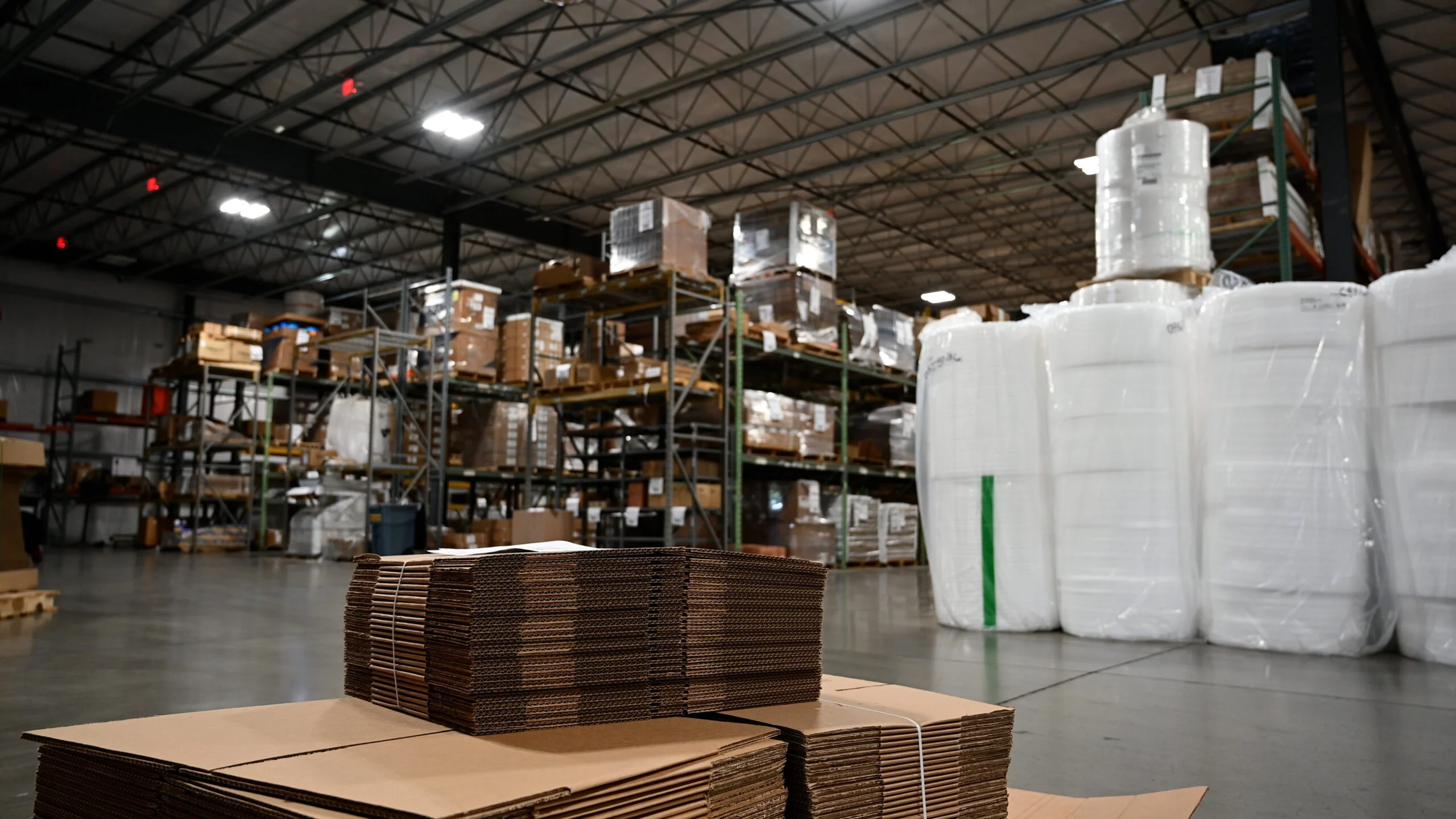
Corrugated packaging and packaging supplies in the Skybox Packaging warehouse

Beyond the Box: What Keeps Packaging Operations Moving

A corrugated box can be designed correctly, arrive on time, and perform exactly as intended. But the packaging operation does not stop with the box. The packaging supplies and equipment around it matter too.

Product still has to be protected, identified, secured, palletized, and shipped. Stretch film has to hold the load. Labels have to scan and stay in place. Tape, protective materials, strapping, and equipment all have to match the way the operation actually runs.

When one of those pieces doesn’t fit the application, the effects can show up in material usage, rework, load performance, identification, or additional handling.

That is why it helps to look beyond the box and review the specific pieces around it that affect whether packaging actually works: stretch film, labels, supplies, and equipment.


Stretch Film Is Part of Pallet Performance

Stretch film is easy to treat as a consumable. The better question is whether the film, load, equipment, and wrapping process are all working together.

Film breaks, inconsistent wrapping, excessive film use, unstable loads, and repeated rework can all be signs that the application deserves a closer look.

In those cases, a useful review considers more than gauge alone. It should look at:

  • Load type and weight
  • Pallet configuration
  • Film specification
  • Current film usage
  • Pallet volume
  • Stretch wrapper settings and equipment
  • Load containment requirements
  • How the finished pallet is handled and shipped

Depending on the load, equipment, and process, there may also be opportunities to evaluate material efficiency or downgauging. That does not mean a thinner film is automatically the right answer. The application must support it.

One example comes from an IPG case study involving G7 Ultra High Performance Stretch Film. The case study evaluated a thinner-gauge film in place of the original film specification, and the application did not require equipment adjustments or modifications. The case study reported improved load retention and reduced annual film consumption, with the customer switching to G7 45 gauge in 10 locations and additional locations planned.

Results will always depend on the application, but the case study is a useful example of evaluating film selection, downgauging, load retention, equipment fit, and material consumption together.

The point is not to use less film at any cost. The point is to use the right film for the load and the process.


The Right Label Starts With the Application

Labels can look like one of the simplest items in the packaging operation. Until they don’t scan, won’t adhere, or do not hold up in the environment where they are being used.

Shipping and identification depend on labels doing their job consistently. That can include:

  • Thermal transfer labels
  • Direct thermal labels
  • Shipping labels
  • Barcode labels
  • Carton labels
  • Pallet labels
  • Warehouse labels

Common formats such as 4×6, 4×2, and 4×3 may cover many applications, but size alone does not determine whether a label is right.

The right label starts with the application.

Surface. Adhesive. Environment. Application.

What surface will the label be applied to? What does the adhesive need to hold to? Will the label encounter temperature changes, moisture, dust, abrasion, or extended storage? How will it be printed and applied?

Those details affect scanning, routing, product identification, inventory control, and customer requirements.

A label that creates repeated scan issues or adhesion problems may seem like a small packaging problem. When teams have to stop, reprint, relabel, or manually correct information, it becomes an operational problem.

That’s why label selection should start with how and where the label will actually be used.


How Packaging Supplies and Equipment Affect End-of-Line Flow

Tape, protective packaging, strapping, stretch wrappers, case sealers, and strapping machines all support the same objective: getting finished product packed and shipped consistently.

The individual products matter, but so does how they work together.

A case sealer cannot perform consistently if the tape is not suited to the application. A stretch wrapper depends on film that matches the load and equipment. Strapping performance depends on the material, machine, tension, and product being secured.

Manual processes deserve the same attention.

If teams are spending unnecessary time taping cases by hand, wrapping pallets manually, adding excessive protective material, or repeatedly correcting packaging issues, the question is not automatically whether equipment is needed. The first question is whether the current material, process, and equipment are properly matched.

Equipment decisions should start with the operation itself:

  • Current and expected volume
  • Labor requirements
  • Manual touchpoints
  • Uptime needs
  • Material availability
  • Packaging consistency
  • End-of-line flow

Sometimes the right answer is equipment. Sometimes it’s a process adjustment. What matters is making sure the material, equipment, and application are properly matched.


Looking at the Packaging Process, Not Just the Purchase

Even if you already rely on us for corrugated, there may be more of the packaging operation worth reviewing.

That does not mean consolidating suppliers simply for the sake of consolidation. A broader packaging relationship should make the operation easier to support.

It can make sense when it improves:

  • Material availability
  • Ordering and replenishment
  • Responsiveness
  • Equipment and consumable compatibility
  • Visibility across the packaging process

The goal is not to change what’s already working. It’s to identify areas where the current setup may not be the best fit for the application.

A stretch film specification may need another look. A label may be technically correct but wrong for the surface or environment. A manual process may be consuming more labor than expected. A supply item may create recurring availability problems.

Those are practical packaging questions, and they are easier to answer when the box and everything around it are considered together.


Start with What You’re Already Using

You don’t need to overhaul the entire packaging operation to find opportunities.

Instead, start with the materials and processes already in place.

Skybox can help review your current stretch film specifications, label samples, packaging supply lists, or equipment setups to identify where we can support more of the packaging process in and around the box.

The right answer depends on the application. The first step is understanding what is being used today, how it’s performing, and what the operation actually needs.

Connect with our packaging experts to review your current specs, labels, supply list, or equipment setup.

How Smarter Packaging Systems Improve Throughput

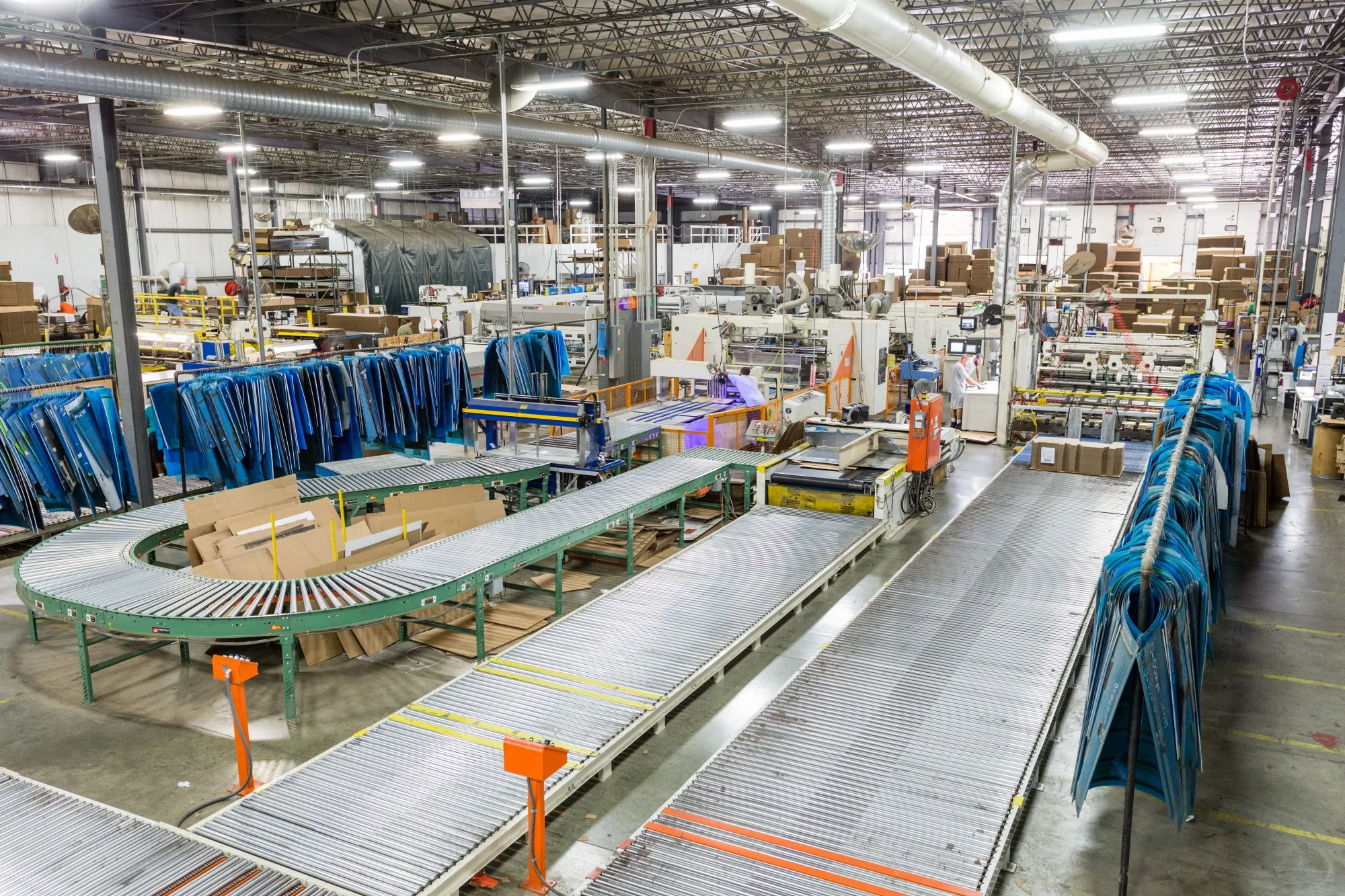
Throughput reflects how efficiently an operation packs and ships product. When throughput suffers, labor and equipment are often the first focus. But just as often, the problem starts with packaging.

In many manufacturing environments, packaging systems directly influence packaging line throughput.

When packaging systems are not aligned with how an operation actually runs, small inefficiencies add up quickly. Lines stop. Changeovers slow down. Teams spend more time reacting than producing.

Smarter packaging systems help remove that friction.


Packaging Is Part of the Operational System

Packaging is not just a box. It is part of the daily workflow.

A packaging system includes:

  • Corrugated design and availability
  • Packaging supplies like tape and stretch
  • Equipment support
  • Inventory planning and replenishment
  • Packaging specifications and standardization

When these elements are not coordinated, throughput suffers, even if everything else is running well.


Where Throughput Gets Lost

Most packaging-related slowdowns come from common, avoidable issues:

  • Running out of boxes, tape, stretch film, or other packaging supplies
  • Packaging that takes longer to assemble and load than necessary
  • Stopping the line to switch box sizes or materials
  • Substituting different packaging than planned and placing rush orders to keep shipments moving

None of these issues seem major on their own. Together, they create downtime that quietly chips away at daily output.


Smarter Packaging Systems Keep Lines Moving

Packaging built for real-world use keeps lines moving:

  • Right-sized corrugated
  • Consistent dimensions
  • Packaging that is easy to handle and assemble

Decisions made upstream directly affect how smoothly lines run downstream.

That same system-level thinking applies to consumables and availability. Running out of tape or stretch film can stop a line just as quickly as a mechanical issue. Planning materials around actual usage, not guesswork, helps prevent avoidable downtime.

When lines are running, availability matters more than per-unit cost because downtime is always more expensive than packaging.


Throughput Improves When Packaging Supports the Operation

Smarter packaging systems do not always require major capital investment. They require alignment, practical planning, and consistent execution. When packaging is planned, available, and designed to support how an operation actually runs, throughput improves naturally.

Packaging should not slow you down.

It should help you ship on time.

At Skybox, a U.S. division of the Atlantic Packaging Group of Companies, we help customers align corrugated, packaging supplies, equipment, and inventory availability so packaging supports throughput instead of getting in the way.

Connect with our packaging experts.


Less Labor, More Momentum

When labor is tight, packaging becomes the bottleneck. Slow manual tape jobs, inconsistent wrapping, and missing labels stall throughput and pile on delays—right when your team can least afford it.

The solution isn’t more labor.
It’s smarter systems.

At Skybox, we help lean teams ship on time by pairing the right machines with the right materials—and delivering the packaging you need, when you need it. No excess. No over-engineering. Just real momentum, built with:

  • Purposeful automation
  • Standardized supply menus
  • Reliable replenishment
  • Packaging systems that fit the way you work

Assess → Pilot → Standardize → Scale

No big-bang CapEx. Just fast, smart wins that build on each other.

  • Assess your current line for repetitive, friction-heavy tasks.
  • Pilot a focused cell (taper + wrapper + protective packaging equipment) with saved settings and matched materials.
  • Standardize your material specs, box menus, quick guides, and PM routines.
  • Scale across lines or locations with minimal training and maximum uptime.

5 Fast Upgrades That Free Up Labor

  1. Case sealing that eliminates rework
    Semi- or fully-automatic carton sealers remove hand fatigue, improve consistency, and speed throughput.

Best for: teams with variable staffing, mixed runs, or high changeover environments.

  1. Wrapping that locks in integrity
    Semi-auto and automatic stretch wrappers ensure repeatable containment force, reduce injuries, and cut film waste.

Best for: any line still hand-wrapping or chasing load stability.

  1. Right-sized boxes + simplified menus
    Fewer SKUs means less searching and faster packouts. We’ll help you right-size box specs and introduce erectors where volume supports it.

Best for: high-mix product lines or operations new to standard work.

  1. Smarter void-fill + protection
    Paper or air systems streamline in-box protection. Protective packaging keeps orders intact the first time.

Best for: ecomm, 3PLs, or variable-size shipments.

  1. Replenishment that runs itself
    We supply tape, stretch, shrink, mailers, strapping, poly, foam, labels, chipboard—Everything You Need to Ship On Time. Add min/max planning for hands-off replenishment.

Best for: seasonal spikes, product launches, or fast-turn SKUs.

Why Skybox?

We specialize in eliminating end-of-line friction—without unnecessary complexity.
We recommend what works, deliver what’s needed, and support it with a team that shows up.

  • Corrugated + Consumables + Machines engineered to work together
  • Local service and responsive support
  • Fast-turn supply keeps your line running—especially when it matters most
  • No overkill. No fluff. Just practical results.

Ready to Gain Momentum?

You don’t need a full automation overhaul to see a difference.
Start small. See results. Scale what works.

Contact us, let’s walk your line
(Talk with a specialist)
Explore Packaging Equipment 
(stretch wrap, shrink, strapping, tapers, erectors)
Get Everything You Need 
(tape, film, mailers, foam, chipboard, poly, labels)

FORO: The Fear of Running Out

Business is booming—until it’s not.

One minute, your team is moving fast, orders are shipping out, and everything’s on track. The next? You’re out of tape. The last box is gone. And just like that, everything stops.

Running out of packaging supplies isn’t just inconvenient—it puts your business at risk. Delays pile up. Customers get frustrated. Your team scrambles to find a fix. And it always happens at the worst possible time.


We Don’t Just Sell Packaging—We Protect Your Workflow

At Skybox, being ready means more than just having good products. It means having the right supplies, exactly when you need them. That’s why our customers don’t just hope they have enough—they know they do.


The Risk of Running Low

You know that uneasy feeling when the gas tank hits empty? Or the last K-cup gets used before a long day? Imagine that same sinking feeling—but with your business on the line.

A shipment that should be out the door? Delayed.

A customer expecting delivery? Still waiting.

A missed reorder? Now it’s an urgent issue.

When packaging runs out, it’s not just about missing materials—it’s about broken trust, halted operations, and added stress.


Always Stocked. Always Ready.

Skybox customers operate with confidence, knowing they’re backed by:

✔ Consistent Supply – No surprises. No shortages. Just what you need, when you need it.

✔ Fast Delivery – We move fast so you can, too— same day or next day.

✔ Priority 1 (P1) Service – When timing is critical, we move your order to the front of the line.

✔ Custom Solutions – We tailor it all to your exact needs.


Never Run on Empty Again

The Fear of Running Out—FORO—can grind business to a halt.

But not when you partner with Skybox. We keep your shelves stocked, your workflow smooth, and your team focused on what matters.

We’ve got your packaging covered— so you can keep your business moving without the stress of running low.


What if the Box Wasn’t There?

The phrase “the most boring job in the world: selling an empty corrugated box” might initially sound uninspiring. However, the reality is quite the opposite. The humble corrugated box plays a pivotal role in the global economy, impacting product production, operations, and the end-user experience. At Skybox Packaging, we recognize that no one tends to think a lot about the box unless it’s not there. Here’s why the box is indispensable and what happens if it suddenly disappears.


  1. Product Damage

Without proper packaging, products are vulnerable to damage. The reliable, cushioning strength of a corrugated box is essential in protecting goods during transit, absorbing impacts that might otherwise damage products. Imagine receiving a brand-new electronic gadget only to find it dented or scratched due to inadequate protection that a corrugated shipper provides. This not only frustrates customers but also increases return rates and operational costs for businesses. A well-designed corrugated box provides protective layers, keeping contents safe from shocks, drops, and external pressures.


  1. Supply Chain Disruption

Corrugated packaging is critical for maintaining an efficient supply chain. Without it, shipments are delayed, production schedules are disrupted, and costs for expedited shipping skyrocket. Businesses rely on timely packaging to ensure smooth operations from manufacturing to delivery.


  1. Customer Experience

The absence of boxes directly impacts the customer experience. Unhappy customers receiving damaged or incomplete products can result in negative reviews, decreased brand loyalty, and lost sales. Proper packaging ensures that the product arrives in perfect condition, meeting customer expectations.


  1. Lost Sales Opportunities

Missed deadlines and canceled orders are common consequences when packaging materials are unavailable. Businesses risk losing revenue and customers, highlighting the importance of having a reliable supply of boxes to meet demand.


  1. Operational Chaos

The absence of boxes leads to disorganized inventory, cluttered workspaces, and stressed employees. Efficient packaging is essential for maintaining order and productivity within a business’s operations.


  1. Environmental Considerations

The absence of boxes can lead to environmental issues. Without standardized packaging, the use of alternative materials increases, potentially leading to more waste and pollution. Skybox Packaging prioritizes sustainability by designing corrugated boxes that are not only effective but also environmentally friendly.


The box may seem insignificant until it’s not there. Its absence can cause widespread disruption, affecting everything from product safety to customer satisfaction and environmental sustainability. At Skybox Packaging, our mission is to ensure you have all the packaging materials you need to ship every day. We ensure that the box is always there, supporting your business operations and enhancing the customer experience. Because no one cares about the box until it’s not there, we make sure it’s there.


The Hidden Cost of Packaging: Ownership

Ever wondered about the hidden costs of packaging ownership? From occupying valuable warehouse space to incurring unnecessary expenses, the impact can be significant. Delve into the hidden costs of owning packaging supplies and how Skybox can help you maximize your revenue by optimizing your space utilization. How much of your square footage is actually contributing to your bottom line?

The Opportunity Cost

Every inch of your facility holds the potential to generate revenue. How do you make sure you’re using the square footage efficiently?

Consider the area dedicated to storing packaging supplies. It’s not just about missed opportunities; it’s about the financial drain those materials represent. In today’s competitive business world, efficient space usage is vital for boosting profits.

Let’s dive into a key metric: revenue contribution per square foot. This figure reveals how effectively you’re using your space in terms of time and money. If your warehouse is mostly filled with inventory, chances are your contribution numbers aren’t where they should be.

Understanding revenue contribution per square foot is crucial. Without it, businesses risk inefficient space use and missed chances to boost earnings.

The True Cost of Packaging

All of those packaging materials taking up space? They’re not just idle—they’re actively costing you money. When you tally up the expenses of storing corrugated packaging and supplies, the true cost becomes clear. Instead of maximizing value by filling your floor space with your own profitable products, you may adding cost by storing packaging supplies that you don’t need to. SkyBox can help you reduce your inventory of supplies with our Next Day, Same Day service.

Skybox’s Solution

At Skybox, we get it: you need to make more while spending less. That’s why we’re here with solutions to trim down your packaging footprint. By optimizing your space and streamlining your packaging processes, we help you reclaim valuable square footage and boost your revenue.

Don’t let packaging ownership drain your profits. With Skybox’s innovative Solutions, you can uncover hidden revenue streams and propel your business forward. Discover how Skybox can slash your packaging costs and boost your bottom line.

Everything In and Around the Box


Getting your product to your customer takes more than a box. Packaging supplies ensure your product arrives safely and elegantly to your customer exactly how it left your shop. At Skybox we make great boxes, but we are more than that. We specialize in everything in and around your box. That way you always have the packaging you need when you need it.

Stretch Film

Stretch film protects your unitized product during transit. This highly functional tool reduces product loss, prevents worker injuries, and discourages load tampering. Cost-efficient product protection relies on specific properties such as break strength, cling, clarity, tear resistance, and static discharge. A Skybox expert will help you find the lowest cost yet most effective film for your needs.

Carton Sealing tape

Safely securing your product in the box is a critical step in getting it to your customer. Carton sealing solutions (TAPE) is an important way to keep your packages safe and secure in transit.  A good carton sealing solution delivers a high quality packaging experience to your customer,  giving them a properly sealed package that is still easy to open, visually appealing, and not damaged when it arrives. Choosing the right sealing methods saves you money and time, improves productivity, and makes sure your customers get what they ordered.

CUSHIONING AND VOID FILL

Imagine– the box safely arrives to your customer, but your product is in pieces. Specific products may require additional protection inside the box with cushioning or void fill. Additional forms of protection are used to secure your product and prevent movement by locking it in place. Cushioning and void fill secure and shield your product from vibration, impact, or shock during transit. Using the right method of protection ensures your product always arrives at its destination safely in one piece.

Poly bags

Poly bags are highly customizable protection against weather, tampering, and dirt. These highly functional, durable, and cost-effective workhorses are a great option for what you need to ship. Skybox can customize bags to meet any need, and we stock a wide variety of poly bags in many different shapes, sizes, and thickness to accommodate your product packaging.

Find what you need with skybox

Skybox Packaging is more than a box manufacturer. We sell the top trusted packaging supply brands, making sure you have everything in and around the box to get your product to your customer. 

We have decades of expertise getting products to customers, safely, elegantly and at the right cost. Let us create a complete packaging solution for your team.


Learn more about how Skybox can partner with you to design and execute a better packaging system for your products so you can get back to making and shipping the products your customers love.

Who’s Managing Your Packaging and Why is it You?

Packaging is one of the least expensive items in the supply chain, yet it takes up a lot of the space. The average corrugated carton sells for less than $1. The average cost of storing packaging often outweighs its value. Certainly, the cost of handling it, counting it, and managing it, makes owning corrugated an expensive hobby.

Here’s the thing: The corrugated industry wants you to manage your packaging. Why? Because it is an inexpensive product that costs a lot to manage. They prefer to focus on setting up the machines and let them run, consuming tons of paper as they go. The last thing they want to do is incur the cost of warehousing, just-in-time manufacturing, or just-in-time logistics. They have convinced buyers all over the world to take on managing their own customer experience for a few percentage points off the cartons.

And the box costs $1.

So, the buyer saved a few cents and dumped the burden of managing the inventory on YOU, the operations team.

There is an alternative.

Skybox Packaging has decades of experience working with our customers to develop world-class on-time-in-full corrugated and packaging supply systems. Our proprietary process ensures that you have your packaging when you need it without storing it all over your facility. We have hundreds of clients that benefit from focusing on making the products their customers love, without the burden of developing an in-house packaging distribution company to ensure they have the packaging they need on-hand. 

Why don’t you let us do that? 

Learn more about how we can set you up with a system that assures that your packaging arrives WHEN and HOW you need it without the overhead of storing and managing it in-house. No more, no less.  

SUPPLY CHAIN SYSTEM: HOW TO EFFECTIVELY COMMUNICATE WITH YOUR TEAM

Supply Chain System: How to Effectively Communicate with Your Team

The supply chain strategy always lands on the operations team. When it’s good, it’s good, but as the last two years have shown, when it’s bad it’s horrendous.

Many operations suffer from complex supply chains, complicated logistics, long lead times, costly and inadequate substitutes, and ever-increasing warehouse burden to store items that do not contribute to the bottom line. Most of the time, breakdowns in the supply chain occur because of external issues that are completely out of your hands, but sometimes, the real missing link isn’t on some foreign shore. Sometimes, the breakdown in the supply chain is due to poor communication.

As an operational leader, you know exactly who needs to be where, what they need, and when they need it. From your vantage point, you can clearly see the whole supply chain and operations, from receiving to manufacture to shipping.

But without communication between production and manufacturing, marketing and fulfillment, development and distribution, optimal design and profit opportunities can be easily overlooked. Worse, regular lapses in communication can result in serious delays, missed deadlines, and lost customers.


So what does this have to do with your packaging?

Here’s the thing: so many of your headaches in operations are the result of an overly complicated production process; damaged goods, either from the manufacturing floor to the warehouse, from the warehouse to the distributor, or from the distributor to the customer; long lead times; or products that don’t stand out from the competition. 

Packaging plays a part in each and every one of these issues. Your production process relies on packaging to protect your product, packaging to advertise and market to customers, packaging to display your product in the stores, and packaging to ship your product from your production floor to its final destinations. Those are four key points in your operations where packaging can slow you down or completely derail your ability to deliver.

BUT, If you are able to streamline communications so that every player in your organization has a voice at the right time, you’ll be far more likely to deliver a quality product on time, undamaged, within budget, and at a profit. And most of this could be solved if YOU weren’t managing your packaging system in the first place. 

Skybox Packaging has decades of experience with comprehensive, custom packaging solutions. We’ve worked with hundreds of businesses who have found ways to be more efficient by clearly communicating with their teams across their operation and by removing the burden of managing your packaging system and storage yourself. We help you iron out these and many other packaging-related issues, beyond supplying you with your packaging needs. 


Let us know how we can help you bridge the communication gaps that are causing breakdowns in your supply chain. Learn more about our custom corrugated solutions and how Skybox can keep packaging issues from being the source of your production delays.

HOW SUSTAINABLE IS YOUR PACKAGING?

How Sustainable is Your Packaging?

It’s no secret that single-use packaging is wasteful. In fact, consumers and regulatory agencies alike are concerned and calling for change.

If your company is embracing sustainability to meet consumer demand and to be more environmentally friendly, it’s time to ask the question: How sustainable is your packaging?

What is sustainable packaging?

Simply speaking, sustainable packaging is: 

  • The use of any kind of material that is good for the environment. 
  • Or simply using less packaging materials.

It’s an approach that reduces your company’s footprint on the environment. 

The types of sustainable materials can run the gamut from recycled cardboard to recyclable mailers.

While it’s ideal to look at your entire lifecycle of your product’s impact on the environment, your company can get some quick wins by looking at the packaging for your products.

Choosing better packaging

When you’re considering making the switch to more sustainable packaging, consider these factors:

  • Test the packaging to minimize product damage. If product damage increases and you have to replace more product, you won’t be making any sustainability gains.
  • Think outside of the box. Work with a sustainable packaging provider who can give you options, for example a beverage carrier that employs a plastic alternative and uses less material, while still showcasing your branding.
  • Evaluate recyclable alternatives. If your company ships products, consider curbside recyclable mailers.
  • Work with an expert. Before you change your processes or packaging, work with a packaging expert who can help you consider the alternatives and help your organization achieve sustainability.

Join the thousands of companies making a commitment to reducing energy and water usage and cutting greenhouse gas and air pollutants.

As a partner in the Atlantic network Skybox utilizes old corrugated containers (OCC), and the Atlantic paper mills produce 100% recycled material for use in our packaging solutions. We can help you find sustainable packaging solutions so your company can make its desire to be sustainable a reality.


Skybox Packaging is not only dedicated to getting you the best displays, product packaging, and shipping materials, we also want to help you make a positive impact through your sustainability efforts. Learn more about how we can help you reach your sustainability goals.


Build Your Custom Solution

Give us a little bit of information so we have the right person ready to reach out to you.